

Yeah, I’m back yo – for a limited time only!
I’ve rounded up the best of biblical studies blogging from March 2016 – despite rumors of the death of blogging sometime last decade, and beset on all sides by the continued preponderance of Very Conservative blogs and the ongoing tyranny of male WASP bloggers.
So please check out the links below … which are accompanied by my own helpful comments and observations.
Enjoy!
Early Christianity
 In what can only be described as “an inspired burst of pedantic and nerdish endeavor,” Wayne Coppins (German for Neutestamentler) has compiled bibliographies for dozens of German New Testament scholars. Wayne calls his endeavor Bibliographies of Neutestamentler/innen in the German Language Sphere (BNGLS). It is a fantastic resource, and I, for one, became physically excited on discovering it.
The Gospels and Jesus
 The doyen of Secular Studies, Phil Zuckerman (The Secular Life) interviews Bart Ehrman about his latest book, Jesus Before the Gospels: How the Earliest Christians Remembered, Changed, and Invented Their Stories of the Savior (HarperCollins, 2016). Phil asks Bart why he prefers to describe the Gospel writers as “remembering” stories about Jesus, instead of having “made shit up”. Bart answers that much of what the biblical writers remembered was shit which earlier followers of Jesus had already made up.
 For his own part, Bart Ehrman (The Bart Ehrman Blog) promotes his book with a number of posts this month. He gives notice of an interview on American Freethought Podcast, hosted by John C. Snider and David Driscoll (available on YouTube). In another post, Bart summarises the purpose of the book as follows (in a post unfortunately only available behind a paywall):
If Misquoting Jesus was about later scribes; and Jesus Interrupted was about problems with our written sources; Jesus Before the Gospels is about what was happening to the stories of Jesus before they were written down in the Gospels. It is about the oral traditions that were in circulation prior to their production in writing… But in order to find out what the process of oral transmission was like, I decided to do something I had never done before and that the vast majority of New Testament scholars have never done. I decided to see what experts think about how memory works. Not experts on the historical Jesus or the Gospels or the New Testament or early Christianity. Experts on memory, experts working in the fields of psychology, sociology, and anthropology.
 Technically, of course, Bart is right that the “vast majority of New Testament scholars” have never examined experts on memory. But New Testament scholarship is a diverse field, which explains why memory studies are not conducted by the vast majority. Whereas, within Jesus studies over the last decade or so, memory studies have saturated the field. Jesus scholars who have engaged experts on memory would include, inter alia, Dale Allison, Chris Keith, Birger Gerhardsson, Werner Kelber, Alan Kirk, Barry Schwartz, Kenneth Bailey, Richard Bauckham, James Dunn, Rafael Rodríguez, Zeba Crook, and Anthony Le Donne – and in addition there have been several conferences or SBL sections and numerous special editions of New Testament journals devoted to memory studies. I hope that clears up any potential misunderstanding of Bart’s words.
And I just noticed Rafael Rodríguez’s serial review of Bart’s book, beginning March 31 on The Jesus Blog.
 Did Mary have sex with Joseph and produce little brothers and sisters for Jesus (or half-brothers and half-sisters)? Catholic New Testament scholar Brant Pitre (Catholic Productions blog) argues no, imaginatively harmonizing information about Jesus’ relatives across all four canonical gospels to argue that the term ἀδελφοὶ refers to his cousins. Protestant New Testament scholar Anthony Le Donne (The Jesus Blog) argues yes, pointing out that, while ἀδελφοὶ can mean many things, in Mark 3:32-34 and 6:3 it most probably means brothers.
 Lois Tverberg (Rabbi Jesus) discusses the crowds who opposed Jesus in the Passion narrative (part 1; part 2; part 3). She argues that “the people who called for Jesus’ crucifixion were not the same crowd as those who hailed him as Messiah the week before.” There is also some discussion of the use of messianic ‘prophecy.’
 Neil Godfrey (Vridar) provides a helpful counter to Brant Pitre’s recent apologetic book, The Case for Jesus (Penguin, 2016), on the issue of the anonymity of the canonical Gospels. Neil rebuts Pitre’s reactionary arguments that the canonical Gospels came with handy titles identifying their authors as Mark, Matthew, Luke, and John. Neil achieves this by juxtaposing Pitre’s arguments for named Gospels with Bart Ehrman’s arguments for anonymous Gospels (in Jesus Before the Gospels).
 Michael Kok (The Apostles’ Memoirs) looks at the Synoptic Problem, Markan priority, and the case for and against Q. He also explores some alternatives to the two most popular explanations of the Synoptic Problem, the two-document hypothesis and the Farrer hypothesis, because neither of them work – indicating that a more complex solution is required. Michael surveys theories of Luke’s Use of Matthew and Q (see also the post by Michael Bird and the guest post by Ron Price), Luke’s Use of Matthew, Q, and Papias, Matthew as the Last Gospel (and Part 2), that Luke’s main sources were Paul and Mark’s Gospel, and Proto-Luke (Part 1, Part 2, Part 3, Part 4). If that wasn’t enough, he also examines How Did Matthew Use His Sources?, whether Luke Knew Matthew’s Editorial Changes, The Lack of “M” in Luke, Alternating Primitivity, and Ancient Compositional Practices, in addition to providing a list of Online Resources about Q.
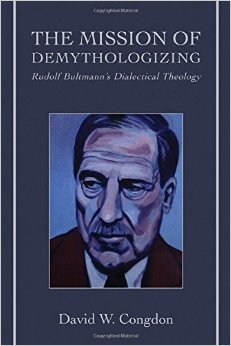 David Congdon (Unsystematic Theology) defends Bultmann’s oft-maligned statement from New Testament and Mythology, that “we cannot use electric lights and radios and, in the event of illness, avail ourselves of modern medical and clinical means and at the same time believe in the spirit and wonder world of the New Testament.” David rightly points out that Bultmann does not thereby show that he “had sold his soul to modernity.” Instead, Bultmann is here drawing a proper contrast between “the cultural context of the ancient world” and “the very different … one we inhabit today.”
 Loren Rosson (The Busybody) has a post on what must be one of the longest footnotes in John Meier’s Marginal Jew series: a 1500-word critique of Richard Rohrbaugh’s interpretation of Jesus’ parable of The Talents. So Loren’s basically written an even longer footnote on a long footnote. At issue is whether Jesus’ version of the parable, before its retelling in Matthew and Luke, presents the Master as oppressive or good in the way he treats the third slave. Rohrbaugh, a prominent member of the
  Context Group, interprets Jesus as opposing the elite systems of exploitation. Maybe. But I wonder whether Jesus, whose proclaimed Kingdom of God did not so much oppose as mimic the prevailing systems of power, was really so opposed to the elite in his society. Or did he, albeit with a slight apocalyptic flavor, desire a bit of that elite power for himself?
Loren also wonders what Jesus meant by the Parable of the Wicked Tenants: was it a martyr prophecy or a critique of violence? He’s undecided, but outlines the different interpretations.
 TV journalist Simcha Jacobovici (The Times of Israel blog) claims to have found Jesus again. This follows Simcha’s earlier cases of Jesus Pareidolia. Simcha has earlier claimed that he found Jesus in a Jerusalem tomb… which didn’t belong to Jesus. Simcha has also claimed to have seen a Jesus-fish engraved on a burial box… which is clearly really an engraved vase. Simcha has, further, claimed to have the nails which were used to crucify Jesus… which were ordinary ancient nails. Simcha has, in another case, claimed to find a hidden allegory to Jesus and his wife in a “Lost Gospel”… but which turned out to be a completely different story (Joseph and Aseneth) which was neither “lost” nor a “Gospel”. This time around, Simcha claims to have seen Jesus in a Dead Sea Scroll (4Q541). But as Deane Galbraith (Remnant of Giants) points out, the possible mention of crucifixion in 4Q541 is not a “new” “discovery”; 4Q541 is not a text which “explicitly” mentions Jesus (whose name does not appear); interpretation of the fragmentary 4Q541 does not involve a cover-up by scholars but a highly ambiguous and uncertain text; and 4Q541 is not a text that was written after Jesus was alive, but 100-150 years before Jesus. Simcha should consider leaving things to the experts, instead of peddling crap theories for crap TV programs.
 Larry Hurtado summarizes two recent articles which have cast doubt on the well-known account of the finding of the Nag Hammadi codices. In these articles, Larry finds support for his estimation that “these texts weren’t the ‘scriptures’ of this or that supposed version or sect of early Christianity, but, instead, probably circulated among loose networks of like-minded individuals who had a particular penchant for things esoteric.” Therefore, Larry contends that the Nag Hammadi texts are not representative of any widespread type of Christianity practiced in Egypt or elsewhere in the fourth century CE. This is a leap too far, Lazza! If there is doubt about the connection of the codices to the Pachomian monastery, this provides no support for the contention that the texts belonged only to ‘elites’
  and not also to a widespread group. Furthermore, we have plenty of corroborating evidence to show that gnostic Christian groups who employed such texts were widespread, such as the St. Antony literature and the official documents opposing Manichaeans.
Matthew Ferguson (Κέλσος) discusses “the genre of Greek popular biography, through the examples of the Certamen of Homer and Hesiod, the Aesop Romance, and the Alexander Romance, and why I think that the Gospels of Jesus in the New Testament belong most to this genre.” The post is a version of his paper recently presented at the SBL Pacific Coast 2016 Regional Meeting at Claremont Graduate University on March 13-14, 2016 – and it is very informative.
Paul
 David Pettigrew (Corinthian Matters) draws our attention to a very useful and up-to-date open-access, searchable comprehensive bibliography for Corinthian Studies.
 Michael F. Bird (Euangelion) wrongly interprets the phrase πίστις Χριστοῦ in Paul as a subjective genitive (for shame!), noting a 2016 SJT article in which Morna Hooker does the same (oh the embarrassment!). The misinterpretation of πίστις Χριστοῦ by a few muddle-headed eisegetes overlooks at least a hundred reasons why πίστις Χριστοῦ is an objective genitive.
 For International Women’s Day, Lao Shi (Jennifer) Chiou (Chiooulaoshi Blog) discusses the women deacons, teachers, and apostles mentioned in Romans 16. In particular, she examines Phoebe, Priscilla, and Junia, concluding, “如果以上的解讀是正確的,那麼姊妹在初代教會中就已擔任執事、教師、使徒,並非只在家裡相夫教子而已。” Having spent a few hours each day for the last year and 9 months learning Chinese, I can honestly say I quite agree.
 Nijay K Gupta (Crux Sola), Matthew Montonini (New Testament Perspectives), and Michael Bird (Euangelion) are unnaturally excited about Richard Hays’ upcoming release. It’s a book called Echoes of Scripture in the Gospels (Baylor, June 2016), Hays’ long-awaited Gospels version of his very influential Echoes of Scripture in the Letters of Paul (Yale UP, 1989). The title of the forthcoming book includes, therefore, an intertextual echo of the former book, inviting us to read the latter in light of the former, and vice-versa, with metaleptic significance that exceeds the original author’s, or indeed the alluding author’s, intentions. Oh the anticipation. I am creaming my pants.
 Matthew Bates (OnScript) takes it into his own hands to interview Prof. John Barclay about his major new book on Paul’s theology, Paul and the Gift (Eerdmans, 2015). The interview really only gets started at 6:35 in the podcast, after some strange small-talk concerning sausages, Central Otago Pinot Noir, and sportsjackets.
Second Century
 Enrico Tuccinard’s stylometric analysis of of Pliny the Younger’s letter to Emperor Trajan (“An Application of a Profile-Based Method for Authorship Verification“, February 14, 2016) reached the conclusion that “its stylistic behaviour appears highly different from that of the rest of Book X” of Pliny’s letters. Tucchinard seeks to explain the differences in style as the result of later Christian “interpolations”. In just over two weeks, Larry Hurtado had appraised himself of stylometric analysis and reacted stron
 gly against Tuccinard’s analysis, asserting that we shouldn’t accept the letter’s inauthenticity, or even its partial inauthenticity, just yet.
Alin Suciu claims that he has found a part of Melito of Sardes’ De Baptismo – in a fragmentary Sahidic papyrus manuscript. If Alin is correct in his identification, it would be a highly significant find.
Early Judaism
 In their Impolite Conversation podcast no. 9 (at Marginalia), Tim Hill and Dan Clanton interview retired Harvard Professor of biblical studies, Paul D. Hanson about his new book, A Political History of the Bible in America (Westminster John Knox, 2015). The interview kicks off at 3:05, and in it we discover that the book treats God’s sovereignty as the “core” of the Bible and attempts to measure the various parts of the canon against that alleged core. It transpires that the book doesn’t have much to do with the Bible in America, but is mainly about political systems in the Hebrew Bible and Hanson’s theological and distinctly American appraisal of them.
 Marg Mowczko (New Life) asks whether Genesis 2:18, 20 infers that women have a special obligation to be helpers of men. She argues that the passage sets out a role not for women but for all human beings.
 Deane Galbraith (Biblical Studies Online) provides links to Prof. Daniel Boyarin’s three-part 2016 Shaffer Lecture in Theology, on March 8th, 9th, and 10th: “Enoch or Jesus? The Quest of the Historical Metatron.” In the lectures, Boyarin discusses the Jewish tradition of an Almighty God who shared heaven with his intrepid sidekick God, the Son of Man / Enoch / Jesus Christ / Metatron – a binitarian tradition which, Boyarin argues, preceded the separation of Christianity from Judaism and continued largely independently of Christianity for centuries thereafter.
 William A. Ross interviews Prof. Jan Joosten, who is currently the Regius Professor of Hebrew at the University of Oxford on Septuagint Studies. In the interview, Prof. Joosten states his hope for the full integration of LXX studies into biblical studies, “causing a long overdue upheaval in biblical studies,” while bewailing the OT – NT divide which acts as a barrier to that integration.
 Jason Schulman (New Books Network) interviews Prof. Benjamin D. Sommer about his new book, Revelation and Authority: Sinai in Jewish Scripture and Tradition (Yale University Press, 2015). And Joseph Ryan Kelly (Marginalia) interviews Benjamin Sommer about the same book. Sommer outlines a “participatory” theory of revelation in the Hebrew Bible, in which “God in some way, outside of language, perhaps, revealed God’s will to the Jewish people, and the Jewish people – starting with Moses, but going on into other generations into the present and into the future – then have to respond to that will, interpret that will and, you might say, translate that will into their own language, for a human community, for their own time.” Leaving aside the non-scholarly question of the truth or untruth of this theory of revelation, I found quite interesting and plausible Sommer’s additional claim that this theory of revelation was implicit in parts of the Hebrew Bible itself.
 Jim Davila (PaleoJudaica) notes a series of three videos by Dr. Sylvie Honigman and Ancient Jew Review on 1-2 Maccabees, based on her book Tales of High Priests and Taxes (University of California Press, 2014).
 Michael Heiser (The Naked Bible Podcast) provides a one-hour discussion of the importance of 1 Enoch in early Judaism and early Christianity. How important is this text? Very important. Often more important than the writings attributed to Moses. Michael begins with the Qumran material and proceeds to the early Christian texts in the New Testament and beyond.
 Bob MacDonald (Dust) examines the Masoretic cantillation marks of the inscriptions to the Psalms. And he sets them to music, following the rules of Suzanne Haïk-Vantoura, and declares that they are beautiful. I would have expected more flats; most of these Psalms are the blues.
 Will Brown (The Biblical Review) reviews Beate Pongratz-Leisten’s Religion and Ideology in Assyria (de Gruyter, 2015). Will points out the potential of the book for understanding “how various tropes within Assyrian ideological discourse may have influenced ancient Israelite religion and kingship.”
Archaeology

Christopher A. Rollston (Rollston Epigraphy), Ryan Thomas (Religion and Literature of Ancient Palestine), and Leen Ritmeyer (Ritmeyer Archaeological Design) discuss two Iron Age seals found in the Givati Parking Lot Excavation, in Jerusalem. The two seals were discovered by digging up a section of
the Palestinian neighborhood of Silwan, which has involved the forced eviction and relocation of many of its Palestinian inhabitants. One of the Iron Age seals belonged to “Elihana bat Gael” (Elihana daughter of Gael), rare for belonging to an Iron Age woman in ancient Palestine. As the theophoric “el” shows, her name derives from devotees of the god El not Yahweh. Coincidentally, “El” is also a theophoric in the name of the group responsible for the Givati Parking Lot Excavation: Elad (i.e., the City of David Foundation). This month, excavators also destroyed a Palestinian children’s playground and a few Palestinian houses, in the hope of finding further artifacts from those who lived there 2500 years ago, and who are apparently more important than living people.

Jim West (Zwinglius Redivivus) notes Alex Joffe’s reply (“How to Chase a White Whale“, March 2016) to Thomas L. Thompson (“Biblical Archaeology: The Hydra of Palestine’s History“, October 2016) in Bible & Interpretation. Joffe accuses Thompson of being guilty of the same error committed by his fundamentalist counterparts. Thompson’s method, claims Joffe, still involves the priority of the text, “but only in order to reassert his disbelief.”
Theory and Reception
 James McGrath (Exploring Our Matrix) reviews Christian film The Young Messiah (dir. Cyrus Nowrasteh, March 11, 2016), based on the novel Christ the Lord: Out of Egypt (Knopf, 2005) by Christian novelist Anne Rice, which narrates Jesus’ return from Egypt at age 7 or 8. James summarizes: “this is a fascinating imaginative exploration of what the childhood of Jesus might have been like, and not a historical reconstruction, much less a depiction of ‘what really happened.'” Peter Chattaway (Filmchat) also provides an informative review. And Ben Witherington (Bible and Culture) has an interview with Anne Rice. James (McGrath; not Jesus’ brother/cousin) also participates in a webchat with director Cyrus Nowrasteh, along with other Patheos bloggers, Deborah Arca, Kate O’Hare, and Paul Asay. I haven’t seen the film, and based on the video clips which Matt Page (Bible Films) has assembled, I won’t be in any hurry to watch it.
 David B. Gowler (A Chorus of Voices: The Reception History of the Parables) discusses Shakespeare’s use of the parables of Jesus (Part 1; Part 2; Part 3).
 Steve Wiggins (OUPblog) discusses Sleepy Hollow (2013-), which is now in its third season. Steve examines the prominent role of the Bible in the television series, both in respect of its content and physical presence.
 James Crossley (The Jesus Blog) notes his article for the British Communist Party, “Splitters! The Death and Resurrection of the Radical Jesus, from the Life of Brian to Jeremy Corbyn.” James discusses some of the different uses to which Jesus has been put in recent politics. He discusses the tolerant, loving, and kind “Liberal Jesus,” the more Marxist-inspired “Radical Jesus,” as well as the Jesuses of the Right, the individualist Jesuses of both Thatcher and also maybe surprisingly, Monty Python’s The Life of Brian (both fl. 1979).
Textual Criticism
 Tommy Wasserman (Evangelical Textual Criticism) tries to convince readers that textual criticism is “flourishing” in biblical studies. Meh. But at least he provides a useful summary of the units and seminars which feature the … er, ahem … exciting and invigorating world of biblical textual criticism.
 Kris Lyle and Chris Fresch have relaunched Old School Script, a blog whose focus is linguistics, including especially discourse analysis. One post this month examines the importance of word order for understanding the meaning of John 4:16. As they summarize, “it’s not what you say but how you say it that matters.”
General Biblical Studies
 Theophrastus (BLT) informs us of a new feminist commentary series which is to feature every book of the Catholic Bible. It’s called The Wisdom Commentary (Liturgical Press), named of course after the proverbial Ms. Hochma.
 Liv Lied (Religion – Manuscripts – Media Culture) follows up on her 2015 International Women’s Day blog post on aggressive and gendered responses to her academic blogging, with a 2016 International Women’s Day post which advocates staring back at trolls.
 Nijay Gupta (Crux Sola) continues his blog series in which he asks prominent biblical scholars how they do research. In March 2016, Nijay adds replies by Dr. David Horrell, Prof. Helen Bond, and Dr. Craig Blomberg (yes, he does research! who knew?) to the earlier replies by Dr. David deSilva, Prof. James D.G. Dunn, Dr. Michael J. Gorman, and Dr. Michael Bird.
 Jim Davila (PaleoJudaica) celebrated his 13th year of blogging, which is like since 4 BCE in human years. Jim provides links to his favorite posts of the last 12 months, including his corrections of various erroneous news stories. They’re well worth the read!
 Richard Goode (Newman Research Centre for the Bible and Its Reception) reviews the first two volumes of the Dictionary of Daily Life in Biblical and Post-Biblical Antiquity edited by Edwin Yamauchi and Marvin Wilson (Hendrickson, 2016-). Goode summarizes, “Yamauchi and Wilson have put together a dictionary that covers all those often over-looked, but nonetheless essential, aspects of everyday life in Antiquity. Entries on Alcoholic Beverages, Aphrodisiacs & Erotic Spells, Barbers & Beards, Dentistry & Teeth, and Doors & Keys rub shoulders with others on Butchers & Meat, Bottles & Glass, Food Production, and Furniture. Topics like these are important helping us to form a clearer understanding of the ancient world and also in throwing light upon the biblical texts.”
Review of Biblical Literature
 66 new book reviews appeared on The Review of Biblical Literature blog during March.
I’ve fixed a glitch on the RBL site which made it hard to open the reviews. So here they are, free for everybody to read:
- Gale A. Yee, Hugh R. Page Jr., and Matthew J. M. Coomber, eds., Fortress Commentary on the Bible: The Old Testament and Apocrypha Reviewed by Jordan M. Scheetz
-
Bruce K. Waltke, James M. Houston, and Erika Moore, The Psalms as Christian Lament: A Historical Commentary Reviewed by James M. Leonard
-
Marcus Vincent, Marcion and the Dating of the Synoptic Gospels Reviewed by Clare K. Rothschild
-
Max Stern, Bible and Music: Influences of the Old Testament on Western Music Reviewed by Tyler R. Yoder
- Mark Roncace and Joseph Weaver, eds., Global Perspectives on the Bible Reviewed by M. Daniel Carroll R.
- Gesine Schenke Robinson, Gesa Schenke, and Uwe-Karsten Plisch, eds., Der Same Seths: Hans-Martin Schenkes Kleine Schriften zu Gnosis, Koptologie und Neuem Testament Reviewed by John D. Turner
- Sophie Ramond, Les leçons et les énigmes du passé: Une exégèse intra-biblique des psaumes historiques Reviewed by Michael S. Moore
- David J. Neville, ed., The Bible, Justice and Public Theology Reviewed by Robert L. Foster
- Andrew T. Lincoln, Born of a Virgin? Reconceiving Jesus in the Bible, Tradition, and Theology Reviewed by Michael Kochenash Reviewed by Marianne Blickenstaff
- Kyung Sook Lee and Kyung Mi Park, eds., Korean Feminists in Conversation with the Bible, Church and Society Reviewed by Suzie Park
- Laurel W. Koepf-Taylor, Give Me Children or I Shall Die: Children and Communal Survival in Biblical Literature Reviewed by Sonya S. Cronin Reviewed by Jason A. Riley
- James K. Hoffmeier, ed., Tell el-Borg I: Excavations in North Sinai Reviewed by Laura Wright
- Paul Hartog, Polycarp’s Epistle to the Philippians and the Martyrdom of Polycarp: Introduction, Text, and Commentary Reviewed by Nancy Pardee
- Eve Levavi Feinstein, Sexual Pollution in the Hebrew Bible Reviewed by Thomas Kazen
- J. Elayi and A. G. Elayi, A Monetary and Political History of the Phoenician City of Byblos in the Fifth and Fourth Centuries B.C.E. Reviewed by Vadim Jigoulov
- Devorah Dimant and Donald W. Parry, eds., Dead Sea Scrolls Handbook Reviewed by Blake A. Jurgens
- Walter Dietrich, Nahum Habakuk Zefanja Reviewed by Klaas Spronk
- Nancy DeClaissé-Walford, Rolf A. Jacobson, and Beth LaNeel Tanner, The Book of Psalms Reviewed by Richard S. Briggs Reviewed by J. Clinton McCann Jr.
- John Day, The Recovery of the Ancient Hebrew Language: The Lexographical Writings of D. Winton Thomas Reviewed by Hélène Dallaire
- Jan M. Bremmer, Initiation into the Mysteries of the Ancient World Reviewed by J. R. C. Cousland
- Keith Bodner, The Artistic Dimension: Literary Explorations of the Hebrew Bible Reviewed by Rachelle Gilmour
- Cornelis Bennema, A Theory of Character in New Testament Narrative Reviewed by Michael R. Whitenton Reviewed by Alicia D. Myers
- Peter Bekins, Transitivity and Object Marking in Biblical Hebrew: An Investigation of the Object Preposition ’et Reviewed by John Hobbins
- Paul N. Anderson, From Crisis to Christ: A Contextual Introduction to the New Testament Reviewed by Renate Hood
- Richard N. Soulen and R. Kendall Soulen, Handbook of Biblical Criticism, Fourth Edition Reviewed by Susanne Luther
- Elisabeth Schüssler Fiorenza, ed., Feminist Biblical Studies in the Twentieth Century: Scholarship and Movement Reviewed by Carol Meyers
- John N. Oswalt, The Holy One of Israel: Studies in the Book of Isaiah Reviewed by J. Michael Thigpen
- B. H. McLean, Hellenistic and Biblical Greek: A Graduated Reader Reviewed by Timothy A. Brookins Reviewed by Steven Thompson
- James McKeown, Ruth Reviewed by Charles Echols Reviewed by Bradley J. Embry
- Natalie N. May and Ulrike Steinert, eds., The Fabric of Cities: Aspects of Urbanism, Urban Topography and Society in Mesopotamia, Greece and Rome Reviewed by Marc Van De Mieroop
- Joram Luttenberger, Prophetenmantel oder Bücherfutteral? Die persönlichen Notizen in den Pastoralbriefen im Licht antiker Epistolographie und literarischer Pseudepigraphie Reviewed by Korinna Zamfir
- Jack R. Lundbom, Writing Up Jeremiah: The Prophet and the Book Reviewed by Amy Kalmanofsky
- Margaret E. Lee and Bernard Brandon Scott, Sound Mapping the New Testament Reviewed by Werner H. Kelber
- Louise J. Lawrence, Sense and Stigma in the Gospels: Depictions of Sensory-Disabled Characters Reviewed by Hector Avalos
- Michael Langlois, Le texte de Josué 10: Approche Philologique, épigraphique et diachronique Reviewed by Hélène Dallaire
- Ljubica Jovanovic, The Joseph of Genesis as Hellenistic Scientist Reviewed by Hans-Christoph Schmitt
- Gershon Hepner, Legal Friction: Law, Narrative, and Identity Politics in Biblical Israel Reviewed by Dustin Nash
- A. E. Harvey, Is Scripture Still Holy? Coming of Age with the New Testament Reviewed by Joseph B. Modica Reviewed by Christopher T. Holmes
- Angela Kim Harkins, Kelley Coblentz Bautch, and John C. Endres S.J., eds., The Watchers in Jewish and Christian Traditions Reviewed by Ryan E. Stokes
- Karlfried Froehlich, with Mark S. Burrows, Sensing the Scriptures: Aminadab’s Chariot and the Predicament of Biblical Interpretation Reviewed by Stefan Fischer
- Esther Eshel and Yigal Levin, eds., “See, I Will Bring a Scroll Recounting What Befell Me” (Ps 40:8): Epigraphy and Daily Life from the Bible to the Talmud Reviewed by Philippus J. Botha
- Trent C. Butler, Joshua 1–12 and Joshua 13–24 Reviewed by Phillip G. Camp
- Athalya Brenner and Frank H. Polak, eds., Words, Ideas, Worlds: Biblical Essays in Honour of Yairah Amit Reviewed by Rachelle Gilmour
- Laura L. Brenneman and Brad D. Schantz, eds., Struggles for Shalom: Peace and Violence across the Testaments Reviewed by Jan Van Henten
- Per Bilde, The Originality of Jesus: A Critical Discussion and a Comparative Attempt Reviewed by Christopher Mount
- Jean-Christophe Attias, The Jews and the Bible Reviewed by Adele Berlin
- Peter Altmann and Janling Fu, eds., Feasting in the Archaeology and Texts of the Bible and the Ancient Near East Reviewed by Wolfgang Zwickel
- Daniel J. Treier, Proverbs and Ecclesiastes Reviewed by Mark R. Sneed
- Bernd U. Schipper and D. Andrew Teeter, eds., Wisdom and Torah: The Reception of ‘Torah’ in the Wisdom Literature of the Second Temple Period Reviewed by William P. Brown
- K. L. Noll, Canaan and Israel in Antiquity: A Textbook on History and Religion Reviewed by John Oswalt
- Richard D. Nelson, Historical Roots of the Old Testament (1200–63 BCE) Reviewed by Lester L. Grabbe
- Kevin W. McFadden, Judgment according to Works in Romans: The Meaning and Function of Divine Judgment in Paul’s Most Important Letter Reviewed by Timothy G. Gombis
- Christl M. Maier and Nuria Calduch-Benages, eds., The Writings and Later Wisdom Books Reviewed by Christine Mitchell
- Edgar Kellenberger, Der Schutz der Einfältigen: Menschen mit einer geistigen Behinderung in der Bibel und in weiteren Quellen Reviewed by Thomas Hentrich
- Chris Keith, Jesus against the Scribal Elite: The Origins of the Conflict Reviewed by Cornelis Bennema Reviewed by Albert Lukaszewski
- Marianne Bjelland Kartzow, Destabilizing the Margins: An Intersectional Approach to Early Christian Memory Reviewed by Ben Sutton
- Joshua W. Jipp, Divine Visitations and Hospitality to Strangers in Luke-Acts: An Interpretation of the Malta Episode in Acts 28:1–10 Reviewed by Michael F. Bird
- Alberdina Houtman, Eveline van Staalduine-Sulman, and Hans-Martin Kirn, eds., A Jewish Targum in a Christian World Reviewed by Siam Bhayro
- Maria Häusl, ed., Tochter Zion auf dem Weg zum himmlischen Jerusalem: Rezeptionslinien der “Stadtfrau Jerusalem” von den späten alttestamentlichen Texten bis zu den Werken Reviewed by Michael S. Moore
- Alain Gignac, L’Épître aux Romains Reviewed by Marc Debanné Reviewed by John Doutre
- Kristine Henriksen Garroway, Children in the Ancient Near Eastern Household Reviewed by Heath D. Dewrell
- Teresa Ann Ellis, Gender in the Book of Ben Sira: Divine Wisdom, Erotic Poetry, and the Garden of Eden Reviewed by Matthew Goff
- Benjamin A. Edsall, Paul’s Witness to Formative Early Christian Instruction Reviewed by Matthew R. Malcolm
- John Day, From Creation to Babel: Studies in Genesis 1–11 Reviewed by Jesse Rainbow
- Tal Davidovich, Esther, Queen of the Jews: The Status and Position of Esther in the Old Testament Reviewed by Jill Middlemas
- Dexter E. Callender Jr., ed., Myth and Scripture: Contemporary Perspectives on Religion, Language, and Imagination Reviewed by Bernard F. Batto
Upcoming Conferences
And there were a few conference announcements:
- La Critica Testuale e gli Studi Biblici
April 12, 2016, Pontifical Biblical Institute, Rome
- International Association for Coptic Studies (IACS) 11th International Congress of Coptic Studies
July 25-30, 2016, Claremont Graduate University, California - The Society for Old Testament Studies (SOTS)
July 25-27, 2016, University of Manchester - Ethnicity/Race/Religion: Identities, Ideologies, and Intersections in Biblical Texts and Interpretation
9-11th August 2016, Centre for Biblical Studies, University of Exeter - British New Testament Conference
September 1-3, 2016, University of Chester - Lines in Sand: Borders, Conflicts and Transitions in Religion, Literature and Culture
9-11 September, 2016, Glasgow - Bible, Critical Theory and Reception
12-13 September 2016, Glasgow - Discovering, Deciphering and Dissenting: Ben Sira’s Hebrew Text, 1896-2016
12-14 September 2016, St John’s College, Cambridge - The Synagogue in Ancient Palestine: Current Issues and Emerging Trends
22–24 September 2016, University of Helsinki
Future Carnivals
If you’re interested in signing up to host a future Biblical Studies Carnival, contact Phil Long (email or @plong42). The next three Carnivals will be hosted by:
- April 2016 – Jeff Carter
- May 2016 – Brian Renshaw
- June 2016 – Kris Lyle
I’ll be back in another seven years (D.v.). Until then.
In His grip,
Bishop N.T. Wrong
Universalist Church of Durham, NC
 December was the official month of publication of the first academic book about bibliobloggers: James Crossley’s
  A debate erupted, yet again, concerning bible translation, and the relative merits of dynamic and formal equivalency. It all stemmed from a Better Bibles Blog post in late November on Matt 9.30a, the comments section for which
 April DeConick discussed
 Congratulations to Thomas L. Thompson, who turns 70 today (Jan 7, 2009). Since his landmark work on the non-historicity of the patriarchal narratives in Genesis — except for a short stint as a house-painter — Professor Thompson has been at the forefront of work on myth and (lack of) history in biblical narratives. His major works include The Historicity of the Patriarchal Narratives (1974), The Origin Tradition of Ancient Israel (1987), The Early History of the Israelite People (1992), The Bible in History: How Writers Create a Past (London, 1999) = The Myth of Ancient Israel (New York, 1999), and The Messiah Myth: The Near Eastern Roots of Jesus and David (2005).
 The abbreviations C.E. (Common Era) and B.C.E. (Before Common Era) are commonly used in modern biblical scholarship to refer to the eras which were formerly known as A.D. (Anno Domini – The Year of The Lord) and B.C. (Before Christ). The usual rationale for the change is sensitivity to other religious and non-religious users of the Gregorian calendar. That is, given the number of worldwide users of the Gregorian calendar who don’t believe Jesus of Galilee is ‘The Lord’, a more neutral term is thought to be provided by ‘Common Era’.
 Leo takes apart
 N.T.WRONG
